
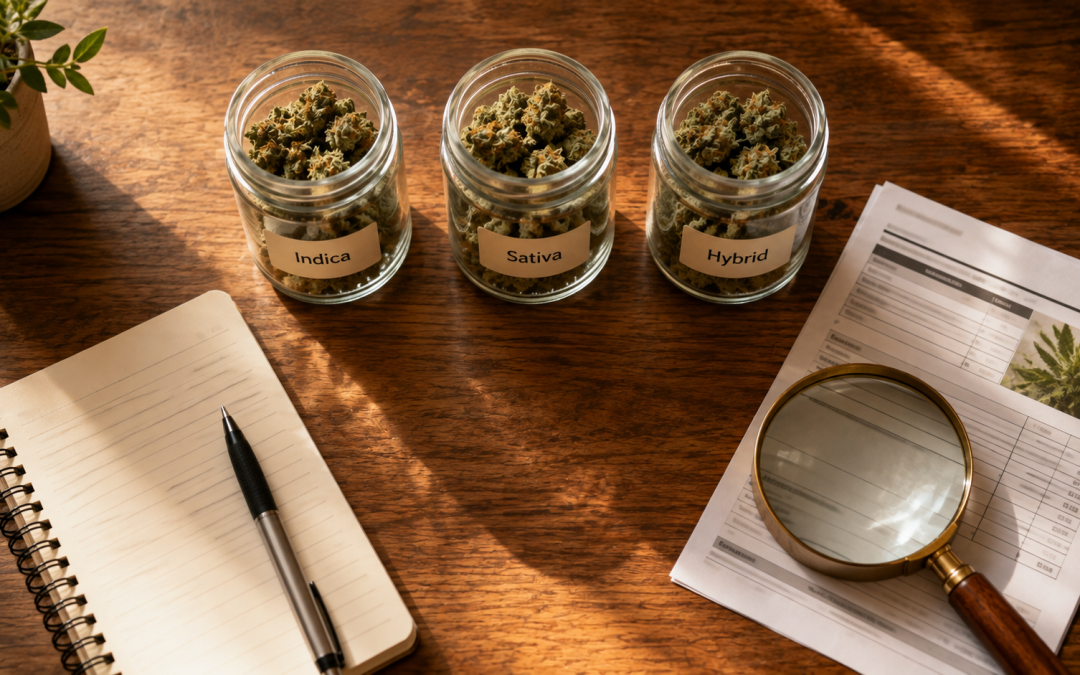
The indica sativa hybrid framework at Oklahoma dispensaries is a helpful starting point, but modern cannabis science shows that cannabinoids and terpenes drive the actual effects. Most cannabis on the market today is hybrid, and the same strain name can feel different depending on its chemical profile. This guide covers the traditional labels, what the science says, and how to shop smarter at any OMMA-licensed dispensary.
The indica sativa hybrid labels on every Oklahoma dispensary shelf give patients a quick way to think about cannabis effects, but the labels tell only part of the story. Traditional dispensary shopping puts indica in the sleepy relaxing box, sativa in the energizing creative box, and hybrid somewhere in between. However, modern cannabis science points to cannabinoids like THC and CBD plus aromatic compounds called terpenes as the real drivers of how a strain will feel. This guide covers both models so Oklahoma patients can make smart choices at the dispensary, whether they lean on the traditional framework or dig deeper into the chemistry.
What Do Indica, Sativa, and Hybrid Actually Mean?
The indica sativa hybrid labels originated in 18th-century botany describing the physical structure of cannabis plants, not their effects. Indica plants grow short and bushy in colder climates. Sativa plants grow tall and lanky in warmer climates. Hybrid plants come from crossbreeding the two. Over decades, the cannabis industry adopted these three terms as shorthand for effect categories:
- Indica: relaxing, sedating, “body high,” often chosen for sleep or evening use
- Sativa: energizing, uplifting, “head high,” often chosen for daytime or creative use
- Hybrid: a mix of both, depending on the parent strains
Traditional shopping wisdom holds that indica strains work better for sleep and pain, sativa strains work better for mood and focus, and hybrids balance the two. This framework works well enough for many patients as a starting point.
Are All Cannabis Strains Hybrids Now?
Yes, nearly every cannabis strain on Oklahoma dispensary menus today is a hybrid. Pure indica and pure sativa strains represent less than 1% of the modern cannabis market. Decades of crossbreeding have blurred the traditional plant categories almost entirely. When a dispensary label says “indica,” it typically means indica-dominant hybrid. If the label says “sativa,” it usually means sativa-dominant hybrid. This is why the same strain name can feel different depending on the grower, harvest, and chemical profile. Two batches of “Blue Dream” from different Oklahoma growers can produce noticeably different experiences even though both carry the same strain name.
What Are Cannabis Terpenes and Why Do They Matter?
Terpenes are aromatic compounds that give cannabis its distinct smell. According to modern research, they shape a strain’s actual effects more reliably than the indica sativa hybrid label. The same terpenes appear in many plants: myrcene in mangoes and hops, limonene in citrus peels, linalool in lavender, pinene in pine trees. In cannabis, terpenes work alongside THC and CBD in what researchers call the entourage effect. Five terpenes matter most for Oklahoma patients shopping for a specific effect:
- Myrcene (earthy, musky): sedating, relaxing, common in “indica” strains
- Limonene (citrus): mood-elevating, stress relief, common in “sativa” strains
- Pinene (pine): alertness, focus, may counter some of THC’s foggy effects
- Linalool (lavender): calming, anti-anxiety
- Caryophyllene (spicy, peppery): relaxing without heavy sedation
Terpene content appears on the Certificate of Analysis (COA) that OMMA-licensed dispensaries can share on request. A strain labeled sativa but high in myrcene may feel more sedating than expected. Meanwhile, a strain labeled indica but high in limonene may feel more uplifting than expected. For a pharmacist-reviewed breakdown of each terpene, the GoodRx terpene guide is a solid patient-facing reference.
How to Choose the Right Strain for Sleep, Pain, or Anxiety
Here is a practical framework for matching strain choice to what you want to address:
- For sleep: Look for high myrcene, high linalool, and moderate-to-high THC with some CBD. Most “indica” strains fit this profile but check the COA for confirmation.
- For chronic pain: A balanced THC:CBD ratio (1:1 or 2:1) often works well. High caryophyllene and myrcene support pain relief. Our Oklahoma chronic pain post covers this in more depth.
- For anxiety: Higher CBD relative to THC tends to reduce anxiety. Limonene and linalool help. High-THC-only strains can sometimes increase anxiety, especially in inexperienced patients.
- For focus and daytime use: Look for pinene, limonene, and moderate THC with some CBD. Traditional “sativa” strains often fit but verify with the COA.
Also, start low and go slow with any new strain, especially if you are new to cannabis or trying a new consumption method.
Ready to Book Your Oklahoma MMJ Card?
Book your telemedicine appointment with Okie MMJ Doctor and get a physician-signed recommendation in a 15-minute visit from home. Use discount code STOPRX at checkout for $10 off, bringing your physician visit to $89. Every physician on our team is fully OMMA registered and SB 1066 compliant. Your recommendation is valid the moment your visit ends. Since 2019, we have helped over 50,000 Oklahoma patients get and renew their cards. That opens the door to the full range of tested indica sativa hybrid products at OMMA-licensed dispensaries.
What to Ask Your Budtender at an Oklahoma Dispensary
Budtenders at OMMA-licensed dispensaries can share the Certificate of Analysis (COA) for any product they carry. Ask specifically for:
- Terpene profile (which terpenes are dominant, and at what percentages)
- THC and CBD percentages (potency and ratio)
- Minor cannabinoids (CBG, CBN, and CBC content, if listed)
- Harvest and test date (fresher is generally better)
If a budtender cannot produce the COA on request, that is a sign to shop somewhere else. Take notes on what you try and how each strain feels. Tracking your response to specific terpene profiles is the fastest way to learn what actually works for your body. Our first-time Oklahoma dispensary post walks through the full first-visit experience for readers who are brand new.
The indica sativa hybrid framework is a useful starting point, but the real answers live in the chemistry. Oklahoma patients who look past the label and read the COA make smarter choices and get more consistent results. If you are ready to explore whether an Oklahoma medical marijuana card fits your situation, our team is happy to help. Contact our team with any questions, or book your appointment online to talk with an OMMA-registered physician today.