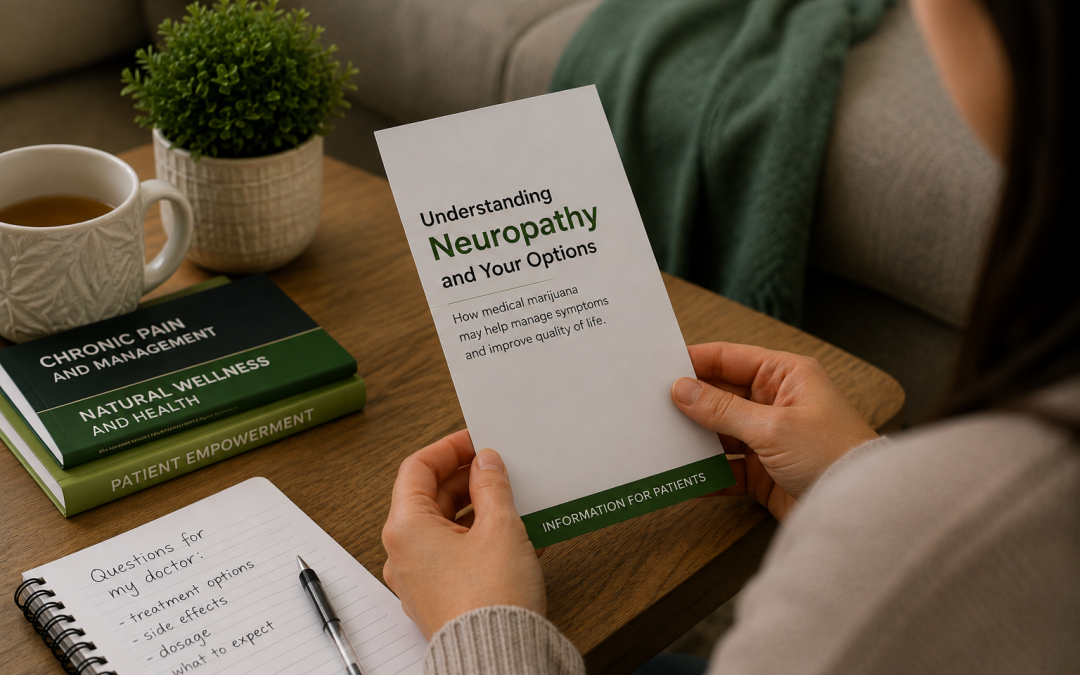
Neuropathy is not listed as a qualifying condition for an Oklahoma MMJ card because Oklahoma has no qualifying conditions list. Any licensed Oklahoma physician can recommend medical marijuana for neuropathy if they believe it may help your specific situation. Research on cannabis and nerve pain is ongoing and results are cautiously promising, though not conclusive. If neuropathy is affecting your daily life, a conversation with an OMMA-registered physician is a reasonable next step.
Neuropathy is one of the most difficult pain conditions to treat. Burning, tingling, shooting, and numbing sensations from nerve damage do not respond well to many standard pain medications. Patients with neuropathy often cycle through treatments for years before finding something that provides real relief.
Medical marijuana has become an increasingly common topic for neuropathy patients in Oklahoma. This post covers what the research actually says, how Oklahoma’s MMJ program works for these patients, and what to expect if you decide to explore this option.
What Is Neuropathy and Why Is It So Hard to Treat?
Neuropathy results from damage to the peripheral nerves. That network carries signals between your brain and spinal cord and the rest of your body. When those nerves malfunction, they send pain signals that do not accurately reflect what is actually happening in the body.
The most common causes in Oklahoma patients include diabetes, chemotherapy, physical injury, autoimmune conditions, and prolonged alcohol use. Diabetic peripheral neuropathy is particularly prevalent. Research published in 2025 found that painful diabetic neuropathy affects nearly half of all patients who develop diabetic nerve damage over their lifetime. That makes it one of the most widespread chronic pain conditions in a state where diabetes rates consistently run above the national average.
Standard treatments for neuropathy include anticonvulsants, antidepressants, and topical treatments. Many patients find partial relief at best. Side effects from these medications can also be difficult to tolerate long-term. Because of that gap between what existing treatments offer and what patients actually experience, many Oklahoma neuropathy patients are asking about medical marijuana.
What Does the Research Say About Cannabis and Nerve Pain?
Research on cannabis for neuropathic pain is active and growing. Results so far are cautiously positive but not definitive.
A 2025 systematic review published in the journal Biomolecules examined 22 randomized controlled trials on cannabis-based medicines for neuropathic pain. The review found meaningful pain reduction in some patients, particularly with THC-CBD combinations. Results were inconsistent across studies, and researchers noted significant methodological limitations in the available evidence. A Cochrane review updated in January 2026 reached a similar conclusion. Some patients reported benefit, but the overall evidence base does not yet support strong conclusions about how well cannabis works compared to other treatments.
Cannabis does appear more consistently tolerated than some conventional neuropathy medications in terms of patient preference. Some neuropathy patients also report reduced pain intensity and improved sleep with cannabis use. Side effects in studies include dizziness and drowsiness, particularly with THC-containing products.
Cannabis research on central neuropathic pain, the type linked to spinal cord injury and multiple sclerosis, tends to show stronger results. However, for diabetic neuropathy, chemotherapy-related neuropathy, and injury-related nerve pain, the evidence base is still developing.
Cannabis may help. Some patients find significant relief. A conversation with a physician who can evaluate your specific situation is the right next step.
Does Neuropathy Qualify for a Medical Marijuana Card in Oklahoma?
Yes, neuropathy can qualify for an Oklahoma medical marijuana card. Oklahoma does not maintain a list of qualifying conditions for medical marijuana. Instead, any licensed, OMMA-registered physician can recommend medical marijuana for any condition they believe may benefit from cannabis treatment. The decision is based entirely on physician judgment, not a checklist.
Oklahoma is one of the most accessible MMJ programs in the country for neuropathy patients. In many other states, patients must prove their condition appears on an approved list. Oklahoma takes a different approach. Your physician evaluates your situation and decides whether medical marijuana is appropriate for you specifically.
Common neuropathy presentations at Okie MMJ Doctor include diabetic peripheral neuropathy, chemotherapy-induced neuropathy, post-herpetic neuralgia (nerve pain following shingles), sciatica-related nerve pain, and neuropathy from injury or surgery. All of these fall within the range of conditions an OMMA-registered physician can evaluate and potentially recommend for.
What Should You Tell Your Okie MMJ Doctor About Your Neuropathy?
Being specific about your symptoms and treatment history makes your physician visit more useful. Oklahoma’s physician discretion model means your doctor is making a genuine clinical judgment. Going in prepared helps that conversation.
Bring or be ready to describe the following during your 15-minute telemedicine visit.
- Where your neuropathy is located. Feet and lower legs are the most common sites for diabetic neuropathy. Hands, arms, and the torso can be affected by other types.
- How you would describe the pain. Burning, tingling, numbness, shooting pain, and sensitivity to touch are all characteristic neuropathy symptoms worth describing specifically.
- What treatments you have already tried. If you have used gabapentin, pregabalin, duloxetine, or other standard neuropathy treatments, your physician will want to know whether they helped and what side effects you experienced.
- How the pain affects your daily life. Sleep disruption is one of the most common impacts of neuropathy. Difficulty walking, standing, or performing tasks with your hands are also relevant.
- The underlying cause if known. Whether your neuropathy is diabetic, chemotherapy-related, or from another cause helps your physician understand your full picture.
Also, you do not need to bring medical records to your appointment, though you can if you have them. Oklahoma’s physician discretion model does not require documentation of a formal diagnosis. Your physician will evaluate your self-reported symptoms and history and make a recommendation based on their clinical judgment.
How Does Medical Marijuana Help With Neuropathy Symptoms?
Researchers believe cannabis may affect neuropathic pain through the body’s endocannabinoid system. That system is a network of receptors found throughout the nervous system that plays a role in pain signaling. THC and CBD interact with these receptors in ways that may reduce pain signal intensity and the emotional response to chronic pain.
For neuropathy patients specifically, the most commonly reported benefits include reduced pain intensity during the day, improved sleep quality, and reduced reliance on other pain medications. Sleep improvement is particularly meaningful for this patient group. Specifically, nighttime nerve pain is one of the most disruptive symptoms of neuropathy and one of the hardest to address with conventional treatments.
Oklahoma dispensaries carry a range of products neuropathy patients use, including tinctures, capsules, topicals applied directly to affected areas, and inhalable products. Dosage and product type vary by patient. However, most physicians and dispensary staff suggest starting low and adjusting gradually.
How Do You Get an Oklahoma MMJ Card for Neuropathy?
The process is the same for neuropathy patients as it is for any other Oklahoma MMJ patient. Getting started with Okie MMJ Doctor takes three steps.
- Book your telemedicine appointment. Schedule online and use code STOPRX for $10 off your visit. Appointments are available Monday through Friday and the visit itself takes about 15 minutes.
- Complete your physician evaluation. Connect with an OMMA-registered Oklahoma physician by video call. Describe your neuropathy symptoms, your treatment history, and how the condition affects your daily life. If approved, you receive your signed recommendation form by email the same day or by 11am the following business day.
- Submit your OMMA application. Log into the OMMA MedPortal and submit your patient license application with your recommendation form, photo ID, proof of Oklahoma residency, and a passport-style photo. OMMA has up to 14 business days to process your application.
Once approved, you can visit any licensed Oklahoma dispensary using your OMMA approval email and a photo ID. You do not have to wait for the physical card to arrive in the mail.
For more on conditions that Oklahoma physicians commonly recommend medical marijuana for, the Oklahoma MMJ qualifying guide covers how the physician discretion model works in full detail.
Okie MMJ Doctor has helped over 50,000 Oklahoma patients through this process since 2019. All of our physicians are OMMA-registered and meet the 2026 SB 1066 education requirements. If you have questions about whether medical marijuana might be right for your neuropathy, contact our team and we will help you figure out the right next step.