
Federal Marijuana Rescheduling: What Oklahoma Marijuana Schedule 3 Means for the Medical Cannabis Industry
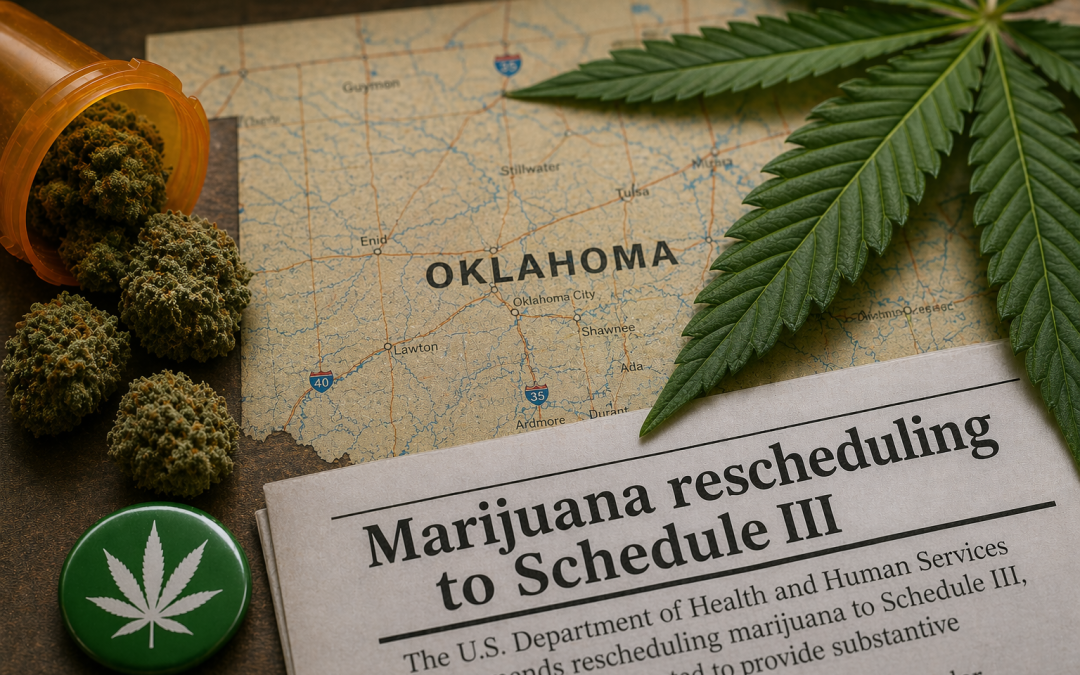
Federal marijuana rescheduling is the biggest shift in U.S. cannabis policy in over 50 years. On April 23, 2026, Acting Attorney General Todd Blanche signed an order that moved state-licensed medical marijuana and FDA-approved marijuana products from Schedule I to Schedule III of the Controlled Substances Act. That order covered Oklahoma’s medical program right away.
Many Oklahoma patients, doctors, and dispensary owners have questions. What changed? What stayed the same? Do you still need your OMMA card? This guide answers all of it in plain English, with a clear focus on what this means for Oklahoma.
What Federal Marijuana Rescheduling Actually Did
The order did two things at once. First, it immediately moved two types of marijuana products to Schedule III: FDA-approved marijuana products and state-licensed medical marijuana. Second, it scheduled a broader hearing for June 29, 2026, to consider moving all marijuana to Schedule III.
Schedule III is the same federal category that covers drugs like Tylenol with codeine, ketamine, and anabolic steroids. Federal law treats these drugs as having accepted medical use. They are also still controlled substances with real federal oversight.
Oklahoma’s medical marijuana program fits squarely inside the April 23 order. Every licensed OMMA business and every OMMA cardholder belongs to a “state-licensed medical marijuana” program, so federal rescheduling covers them right now. This change does not include recreational marijuana. Oklahoma does not have a recreational program anyway, so most of this debate does not apply here.
Do I Still Need My Oklahoma Medical Marijuana Card After Federal Rescheduling?
Yes. You still need an OMMA card to legally buy medical marijuana in Oklahoma. Federal rescheduling does not legalize marijuana at the federal level, and it does not change Oklahoma state law one bit.
Here is why your card still matters, and probably matters more than ever:
- OMMA still controls patient licensing in Oklahoma
- Licensed dispensaries still only sell to OMMA-approved cardholders
- Your card still gives you legal protection under Oklahoma’s medical marijuana law
- Federal Schedule III status actually strengthens the value of a physician-backed recommendation
Some patients have asked whether this makes Oklahoma “recreational.” It does not. Oklahoma voters rejected recreational legalization in 2023, and that has not changed. For a deeper look at the medical vs. recreational question, see our post on whether weed is legal in Oklahoma in 2026.
What Changes for Oklahoma MMJ Patients
For most Oklahoma patients, daily life looks the same this week as it did last week. The patient process has not changed. You still visit an OMMA-registered doctor, get a recommendation, submit your OMMA application, and shop at licensed dispensaries.
A few things will start shifting over time, though:
- Research access. Schedule III removes the Schedule I research barriers, so more Oklahoma and national studies on conditions like chronic pain, PTSD, and anxiety are likely.
- Doctor comfort. Federal recognition of medical value may encourage more Oklahoma physicians to get involved. This matters because Oklahoma’s SB 1066 law still requires doctors to register with OMMA before recommending.
- Stigma. Federal acknowledgment that medical marijuana has real value helps take the stigma off patients who use it.
One question that comes up a lot is whether rescheduling changes your gun rights as a cardholder. The answer is that the federal government filed a separate statement on April 23 saying rescheduling does not change their current position. Oklahoma state protections still apply. For the full breakdown, read our guide on Oklahoma MMJ cards and firearms.
How Does Schedule III Affect OMMA and SB 1066 Compliance?
Schedule III does not replace OMMA or SB 1066. Oklahoma state rules still run the show here. Patient licensing, doctor registration, grower permits, and dispensary oversight all remain under OMMA. Under SB 1066, every recommending physician must register with OMMA and finish the state’s approved medical marijuana education.
If anything, Schedule III makes SB 1066 compliance more important, not less. Under federal law, Schedule III substances usually require physician involvement, so the role of a registered Oklahoma doctor now sits squarely at the center of how federal and state rules fit together. A recommendation from an unregistered physician still gets rejected by OMMA, regardless of what Washington does.
For patients, the practical takeaway is simple. Confirm your doctor is OMMA-registered before your appointment. Our full SB 1066 Oklahoma guide walks through how to verify that.
What Changes for Oklahoma Dispensaries and Manufacturers
The biggest immediate impact of federal rescheduling hits Oklahoma dispensaries, growers, and processors. That impact comes from a single line of the federal tax code called Section 280E.
Section 280E blocks any business that sells a Schedule I or Schedule II substance from deducting normal business expenses like rent, payroll, or utilities. As a result, many Oklahoma dispensaries have paid effective tax rates above 70 percent. These owe taxes on gross revenue, not profit, the way every other business does.
Schedule III sits outside the reach of Section 280E. So as of April 23, state-licensed medical marijuana businesses in Oklahoma can once again take normal deductions. The Treasury Department and IRS announced they will issue guidance on the exact timing, but the ceiling has already lifted.
What this means for Oklahoma dispensary owners, growers, and processors:
- Normal business deductions are back on the table
- Effective tax rates should drop significantly
- Stronger cash flow may support hiring, expansion, or lower consumer prices over time
- State-licensed businesses will also need to register with the DEA under the new order
Banking access is a separate issue. Rescheduling alone does not fix cannabis banking. That fix takes an act of Congress, specifically the SAFER Banking Act or something similar. Most Oklahoma dispensaries will still operate primarily in cash for now.
Does Rescheduling Change Federal Drug Testing for Oklahoma MMJ Cardholders?
Not yet. Federal drug testing rules still treat marijuana as prohibited, even with the Schedule III change. This matters especially for safety-sensitive workers, Department of Transportation drivers, and federal employees.
The April 23 order does not mention federal drug testing. The Department of Transportation has not updated its drug testing rules. Until those agencies issue new guidance, a positive THC test still carries the same consequences it did last week, even if you have an OMMA card.
Oklahoma state employment protections are different, and they have not changed either. Your Oklahoma MMJ card still provides specific protections against employment discrimination under state law, as long as you follow the rules. Our full post on Oklahoma MMJ card employment protections breaks down what those are.
What Changes for Oklahoma Doctor Recommendations
The recommendation process itself has not changed. Oklahoma doctors still issue recommendations the same way they did before April 23. Patients still submit those recommendations to OMMA as part of their card application. Telemedicine is still fully allowed.
However, Schedule III status shifts the medical landscape in a few subtle ways:
- More research data. Federal research barriers are coming down, so doctors will have better clinical evidence over time.
- Greater physician comfort. Federal recognition of medical value makes it easier for traditional doctors to discuss cannabis as a treatment option.
- SB 1066 still sets the rules. Every recommending physician must remain OMMA-registered and must have completed the state’s approved medical marijuana education. That is not going to change.
At Okie MMJ Doctor, our physicians finished the SB 1066 education requirements and registered with OMMA before January 1, 2026. So every recommendation you get from us meets OMMA standards, and every visit fits the new federal framework as well.
What Happens Next
The next big date on the calendar is June 29, 2026. On that day the DEA will hold an administrative hearing on whether to move all marijuana, not just medical, to Schedule III. That hearing should wrap up by July 15, 2026.
Between now and then, expect a few more shoes to drop:
- Treasury and IRS tax guidance for state-licensed medical marijuana businesses
- Possible legal challenges from anti-legalization groups like Smart Approaches to Marijuana
- New DEA registration rules for Oklahoma medical marijuana businesses
- Possible updates to federal drug testing rules over the next several months
You can read the full Justice Department announcement on the DOJ press release if you want the source document.
Bottom Line for Oklahoma
Federal marijuana rescheduling in Oklahoma is real, it is immediate, and it is big. Still, it does not legalize marijuana and it does not override any Oklahoma state rules. Your OMMA card is still your legal protection. Your doctor still has to be SB 1066 compliant. Your dispensary still checks your card at the door.
What Schedule III does is give Oklahoma’s medical marijuana industry room to breathe. Patients should see more research, more physician comfort, and less stigma over time. Dispensaries and manufacturers should see real tax relief starting this year. Doctor recommendations remain the centerpiece of the entire Oklahoma system, and their role has only grown stronger.
Ready to Get Your Oklahoma MMJ Card?
Okie MMJ Doctor has helped over 50,000 Oklahoma patients since 2019. Our physicians are OMMA-registered and SB 1066 compliant, with same-day telemedicine appointments available across all 77 Oklahoma counties. Use code OKIEDOC to save $30 on your visit.
Contact us today or book your appointment online. It is super simple.