
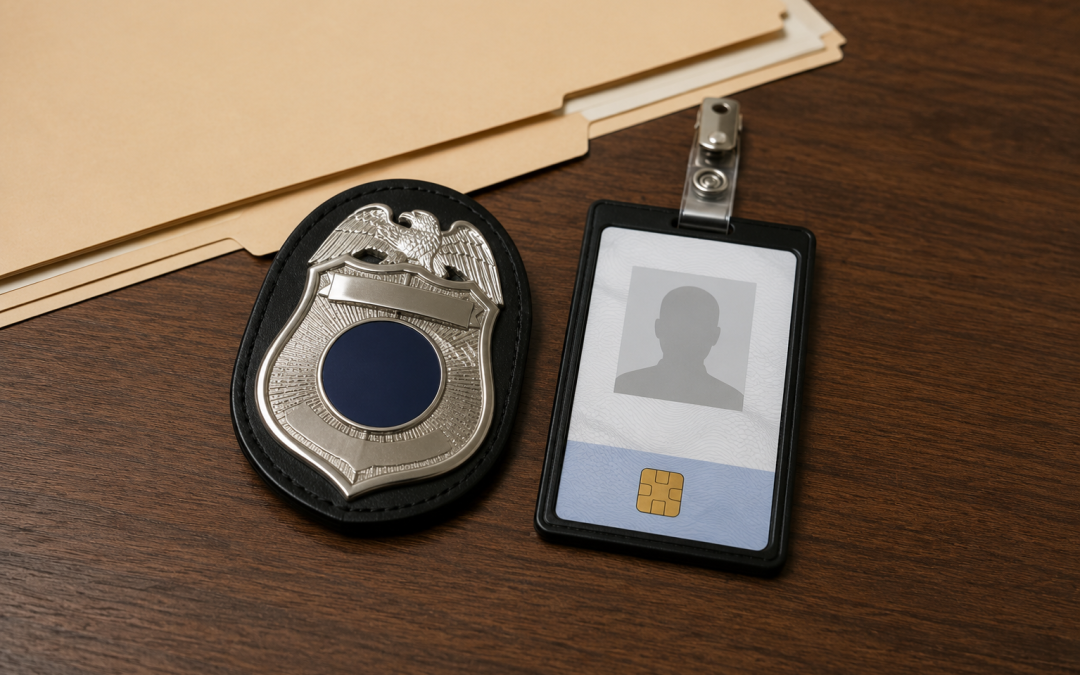
Federal employees and federal contractors subject to federal drug testing cannot use medical marijuana without risking their job. An Oklahoma MMJ card provides no protection against federal drug testing consequences. The April 2026 marijuana rescheduling to Schedule III did not change federal drug testing rules or security clearance adjudication standards. Certain Oklahoma state government positions are also barred from holding an MMJ card under Oklahoma law. If you work for the federal government or hold a security clearance, an Oklahoma MMJ card carries real professional risk.
Oklahoma has one of the largest concentrations of federal employees and military contractors in the country. Tinker Air Force Base alone employs tens of thousands of workers subject to federal rules. The VA, the FAA, federal courts, federal contractors, and a wide range of other employers operate under federal drug policy — not Oklahoma state law. If you hold or are considering an Oklahoma medical marijuana card and work in any of these environments, the rules are different from what applies to most Oklahoma workers. This guide covers exactly where the lines are drawn.
Two Categories: Federal Employees and Federal Contractors
Understanding your exposure starts with understanding which category you fall into. Both groups face significant risk, but the specific rules differ.
Federal employees are direct employees of the United States government — military personnel, civilian employees of federal agencies, VA workers, IRS employees, postal workers, and others whose paycheck comes from a federal agency. Federal contractors are employees of private companies that hold contracts with the federal government. Defense contractors near Tinker, IT services firms with federal contracts, construction companies on federal projects, and consulting firms serving federal agencies all typically fall here.
Both groups are generally subject to federal drug testing requirements. Both groups face potential consequences for marijuana use regardless of an Oklahoma MMJ card. The key difference is that federal employees face additional exposure through security clearances and agency-specific drug-free workplace policies that federal contractors may not share in the same way.
Federal Drug Testing Rules — Unchanged After April 2026
On April 23, 2026, the DOJ moved state-licensed medical marijuana to Schedule III of the Controlled Substances Act. For a full breakdown of what that change means for Oklahoma patients generally, see our post on Oklahoma marijuana Schedule III rescheduling. For federal employees specifically, the answer is direct: the rescheduling changed nothing.
In March 2026, HHS confirmed in the Federal Register that federal workplace drug testing panels are unchanged. Marijuana remains on the panel. In May 2026, the DOT’s Office of Drug and Alcohol Policy and Compliance confirmed the same for transportation workers. Executive Order 12564, which established the Drug-Free Federal Workplace program, remains in effect. Federal agencies retain authority to require drug-free workplaces regardless of marijuana’s scheduling status.
The practical result is this: a federal employee who tests positive for marijuana during any federal drug test faces the same consequences in July 2026 as they did in January 2026. An Oklahoma MMJ card provides no protection and cannot serve as a legitimate medical explanation for a positive federal drug test. For a complete breakdown of how drug testing intersects with your Oklahoma MMJ card, see our guide on Oklahoma MMJ card and drug testing.
Security Clearances — The Additional Layer for Federal Workers
Federal employees who hold or are seeking a security clearance face an additional layer of risk beyond drug testing. Security clearances are governed by the National Security Adjudicative Guidelines, specifically Adjudicative Guideline H, which covers drug involvement. SEAD-4 and the ODNI’s December 2021 clarifying guidance on marijuana use all remain unchanged after the April 2026 rescheduling.
ClearanceJobs confirmed on April 26, 2026 that the reclassification does not create a green light for clearance holders. Arnold and Porter, a major national law firm, published a direct analysis in May 2026 confirming that security clearance applicants and holders remain prohibited from using medical marijuana even where state law permits it. The reasoning is consistent: marijuana use raises questions about judgment, reliability, and willingness to comply with federal law — factors that remain central to clearance adjudication regardless of scheduling status.
Any marijuana use — past or present — must be disclosed on SF-86 forms and will face adjudicator review. The recency, frequency, and context of use all factor into that review. Holding an Oklahoma MMJ card while subject to clearance adjudication creates documented evidence of intent to use a federally controlled substance. That is a significant risk for anyone whose clearance is current or pending.
Which Oklahoma Government Workers Cannot Hold an MMJ Card at All
Oklahoma law itself bars certain state government workers from obtaining an OMMA patient license. Under Oklahoma statute, the following positions cannot hold a medical marijuana patient license:
- Sheriffs and deputy sheriffs
- Police officers
- Prosecuting officers
- Officers and employees of the Oklahoma Medical Marijuana Authority
- Officers and employees of municipalities issuing medical marijuana licenses
These prohibitions exist under Oklahoma state law — not federal law. Workers in these positions are barred from holding an OMMA card entirely, regardless of their medical condition or need.
Oklahoma State Employees — Different From Federal Rules
Oklahoma state employees who are not in the barred categories above and whose positions are not safety-sensitive receive the same protections as private-sector employees under Oklahoma’s Medical Marijuana and Patient Protection Act. A state employee at the Department of Commerce, the Department of Agriculture, or a similar agency in a non-safety-sensitive role generally has the same card-holding rights as any other Oklahoma patient.
However, state employees in safety-sensitive roles do not have those protections. Safety-sensitive positions include any role where impairment could endanger the worker or others. These workers can hold an MMJ card but their employer can act on a positive drug test without violating Oklahoma’s patient protection laws. For a full breakdown of how Oklahoma’s Oklahoma MMJ employment protections work across different job categories, see our dedicated employment guide.
What the 2026 Rescheduling Actually Changed for Federal Workers
Very little of immediate practical value. The April 2026 order moved state-licensed medical marijuana to Schedule III, which is significant for Oklahoma dispensaries and manufacturers who can now deduct normal business expenses on federal taxes. For individual federal employees and contractors, the practical changes are minimal in 2026.
A broader DEA administrative hearing on rescheduling all marijuana began June 29, 2026. A final rule from that process is not expected before late 2026 at the earliest. Even after a final rule, Congress may act to preserve existing federal workplace testing authority, and agencies retain independent authority under Executive Order 12564. Federal employees should not make career decisions based on anticipated policy changes that have not yet taken effect.
Practical Guidance for Federal Workers Considering an Oklahoma MMJ Card
The clearest guidance for federal employees and contractors is this: holding the card is not illegal, but using marijuana while subject to federal drug testing creates real professional risk that an Oklahoma MMJ card cannot mitigate. The decision involves weighing personal medical needs against federal employment obligations — a personal decision that should be made with accurate legal information rather than assumptions about what rescheduling changed.
Workers who are uncertain about their specific testing obligations should consult their agency’s drug and alcohol compliance officer or a federal employment attorney before making any decisions. The consequences of a positive federal drug test — termination, clearance revocation, contractor debarment — are serious and not easily reversed.
Oklahoma patients who work in the private sector without federal drug testing requirements enjoy strong protections under Oklahoma law. Our Oklahoma MMJ employment protections guide covers how those protections work and what they cover across different job categories.
Okie MMJ Doctor has helped over 50,000 Oklahoma patients get and renew their OMMA cards since 2019. Our physicians are OMMA-registered and meet all 2026 SB 1066 requirements. If you have questions about whether an Oklahoma MMJ card is right for your situation, our team is happy to help.
Schedule an appointment today and use code STOPRX for $10 off. Questions? Contact our team and we will help.