
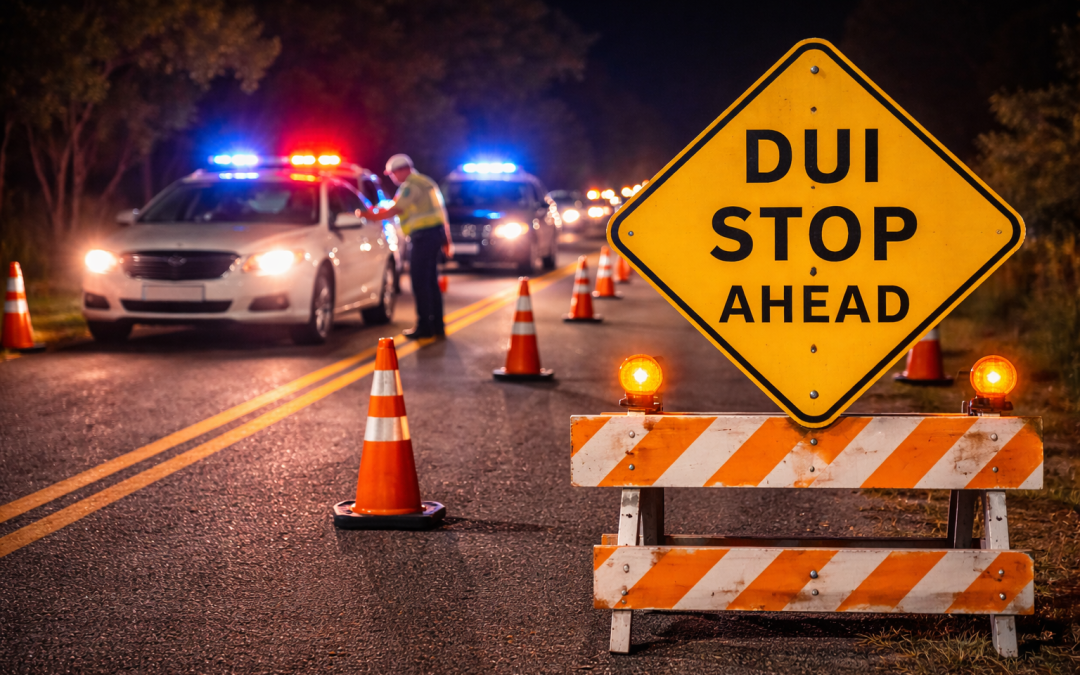
Many Oklahoma MMJ patients drive every day. Many of those same patients have questions about how their card interacts with DUI laws. If that describes you, you want a straight answer before you get behind the wheel.
Your Oklahoma MMJ card does not protect you from a DUI charge. The state enforces a strict zero-tolerance standard for THC, and new 2025 laws tightened the rules inside vehicles even further. Read everything below before you make any assumptions.
This guide covers where things stand in 2026. It explains what Oklahoma’s DUI laws mean for MMJ patients, how THC testing works, what the new vehicle rules require, and which questions belong with an attorney.
Note: This post is informational only and does not constitute legal advice. Consult a licensed attorney for guidance specific to your situation.
Your MMJ card does not protect you from a DUI
This is the most important thing to understand. Oklahoma law makes no exception for MMJ cardholders when it comes to driving.
Under Oklahoma Statute 47 O.S. § 11-902, it is unlawful for any person to drive, operate, or be in actual physical control of a motor vehicle while under the influence of any intoxicating substance. That includes marijuana. Your MMJ card is not a defense to a DUI charge. Having a valid OMMA patient license does not change that.
State officials have been clear on this point. Law enforcement can arrest and charge any driver — cardholder or not — if they have reason to believe that driver is impaired by cannabis.
The bottom line: Legal medical marijuana use in Oklahoma does not give you the right to drive while impaired. Full stop.
Oklahoma’s zero-tolerance THC standard
Oklahoma enforces one of the strictest cannabis DUI standards in the country. It is a per se zero-tolerance law.
Under the per se standard, having any detectable amount of THC or its metabolites in your blood, saliva, urine, or other bodily fluid at the time of a test administered within two hours of your arrest is enough to support a DUI charge. There is no legal THC limit the way there is a 0.08% BAC limit for alcohol. Any amount can trigger charges.
You can verify Oklahoma’s DUI-D per se law directly through the Oklahoma Highway Safety Office’s official guidance on drug-impaired driving.
This creates a serious challenge for MMJ patients. THC metabolites can remain detectable in the body for days or even weeks after use — long after any actual impairment has ended. A patient who used cannabis legally the night before could test positive the following morning with no impairment whatsoever.
Oklahoma courts have acknowledged this problem. The prosecution must prove actual impairment at the time of driving, not just the presence of metabolites alone. But the per se standard gives prosecutors strong footing, and defending against a positive test requires experienced legal help.
Representative Andy Fugate introduced House Bill 3018 in January 2026 specifically to address this issue. The bill aims to exclude marijuana metabolites from the blood-testing aspects of the aggravated DUI law while keeping field sobriety tests intact. As of 2026, this legislation is pending and the zero-tolerance standard remains in effect.
New vehicle rules that took effect in 2025
MMJ patients who transport cannabis in a vehicle need to know about two significant law changes that took effect in 2025.
First, Senate Bill 786 became law on November 1, 2025. It made it illegal to have unsealed marijuana in the passenger area of a vehicle — even for licensed MMJ cardholders. This mirrors Oklahoma’s existing open container laws for alcohol. Your cannabis must be in its original sealed packaging and stored away from the passenger area when you are in a vehicle.
Second, new rules also make it illegal for marijuana to be used anywhere inside a vehicle. This applies to both drivers and passengers. A driver can now face charges if a passenger is smoking marijuana in the vehicle, even if the driver is not using cannabis themselves.
Violations of these rules can result in misdemeanor charges and fines of up to $500.
The practical rule: Treat your MMJ products like alcohol in a vehicle. Sealed, stored, out of reach, and never consumed while inside the car.
What “actual physical control” means for MMJ patients
Oklahoma’s DUI law does not require you to be actively driving to face a charge. The statute covers anyone who is in “actual physical control” of a motor vehicle.
Oklahoma courts have held that sitting in the driver’s seat with access to the keys can meet this standard — even if the vehicle is parked. This surprises many patients who believed they were making a safe choice by not driving. If you consume cannabis and then sit in the driver’s seat of your car, you could face a DUI charge even without starting the engine.
The safest approach is straightforward. Do not sit in the driver’s seat of a vehicle after using cannabis until enough time has passed for any impairment to clear completely.
DUI testing and what to expect
Oklahoma law enforcement uses blood, urine, and saliva testing to detect THC. Oklahoma also operates under implied consent laws.
Under implied consent, any person operating a motor vehicle in Oklahoma is deemed to have given consent to chemical testing when arrested for DUI. Refusing a chemical test carries its own penalties — separate from the DUI itself.
Refusal penalties include a 180-day license revocation on a first refusal, with an ignition interlock device required for 18 months upon reinstatement. A second refusal within 10 years results in a one-year revocation and a three-year IID requirement.
Oklahoma is also developing marijuana breathalyzer technology. Legislation has authorized the Department of Public Safety to begin steps toward roadside breathalyzer testing for THC. That technology is not yet widely deployed, but it is coming.
DUI penalties Oklahoma MMJ patients need to know
Oklahoma’s DUI penalties are serious. Here is what a conviction can mean.
- First offense (misdemeanor) — Up to one year in jail, fines up to $1,000, license suspension, mandatory drug and alcohol evaluation, and substance abuse education. Most first-time offenders do not serve jail time, but the charge itself carries significant consequences.
- Second offense within 10 years (felony) — Oklahoma escalates fast. A second DUI within 10 years is a felony, carrying one to five years in prison and fines up to $2,500.
- Third offense (felony) — One to 10 years in prison and up to $5,000 in fines.
- DUI causing great bodily injury (felony) — Four to 20 years in prison and up to $5,000 in fines.
- DUI causing death — Four years to life in prison with a mandatory minimum of four years.
A DUI conviction stays on your Oklahoma driving record permanently. Criminal records are also permanent unless expunged. First-offense misdemeanor DUIs that received a deferred sentence may qualify for expungement after completing all court requirements.
Practical rules for Oklahoma MMJ patients who drive
Here is a plain-language breakdown of how to stay protected.
- Never drive while impaired. Your MMJ card is not a defense. Impaired driving is illegal regardless of your cardholder status.
- Understand the zero-tolerance standard. Any detectable THC can support a DUI charge in Oklahoma. Metabolites stay in your system long after impairment ends.
- Store cannabis properly in your vehicle. Sealed, in its original packaging, stored away from the passenger area. This is the law as of November 2025.
- No use inside a vehicle. This applies to you and your passengers. Using cannabis in a vehicle — even while parked — can result in charges.
- Do not sit in the driver’s seat after using cannabis. Actual physical control of a vehicle can trigger a DUI charge even without driving.
- Know your implied consent obligations. Refusing a chemical test carries automatic license revocation penalties separate from any DUI charge.
- Talk to an attorney if you are charged. Marijuana DUI cases are complex. The prosecution must prove impairment, not just presence of THC. An experienced Oklahoma DUI attorney can make a critical difference.
Are patients worried about this before getting their card?
Yes — this question comes up often. Patients who drive for work or rely on their vehicle in rural Oklahoma are right to think it through before getting their card.
The important thing to understand is that the DUI risk is about behavior, not about holding a card. Patients who use cannabis responsibly — at home, in the evening, with enough time before driving — face no more DUI risk than they did before getting their card. The card itself does not change your driving rights in any direction.
The risks are real for patients who use cannabis and drive while impaired or who fail to follow the new vehicle rules. For everyone else, responsible use and the same common sense that applies to any medication or intoxicant keeps patients fully protected.
Getting your Oklahoma MMJ card if you decide it is right for you
Okie MMJ Doctor has helped over 50,000 Oklahoma patients get their MMJ cards since 2019. The physician visit happens entirely online. It takes about 15 minutes. Same-day appointments are available Monday through Friday between 10am and 6pm.
Our physicians hold full Oklahoma licenses. They complete all OMMA registration requirements under the 2026 SB 1066 rules. Your recommendation will be valid with the state.
Right now, book your visit for $69 using code OKIEDOC at checkout. That saves you $30 off the standard $99 fee. No recommendation, no charge — full refund, no questions asked.
Book your appointment at Okie MMJ Doctor and use code OKIEDOC to save $30.
Frequently asked questions about MMJ cards and DUI in Oklahoma
Does my MMJ card protect me from a DUI charge in Oklahoma?
No. A valid OMMA patient license does not protect you from DUI charges. Oklahoma law makes no exception for MMJ cardholders. If law enforcement believes you are impaired while driving, you can be arrested and charged regardless of your cardholder status.
Can I get a DUI from cannabis I used the day before?
Potentially, yes. Oklahoma’s per se standard means any detectable THC in your system within two hours of arrest can support a DUI charge. THC metabolites remain detectable for days or weeks after use. However, the prosecution must prove actual impairment at the time of driving — not just the presence of metabolites. This is a complex legal area. Talk to an attorney if you face this situation.
Can I keep cannabis in my car in Oklahoma?
Yes, but only if it is in its original sealed packaging and stored away from the passenger area. As of November 1, 2025, unsealed cannabis in the passenger area of a vehicle is illegal under Senate Bill 786 — even for licensed MMJ cardholders.
Can my passenger smoke cannabis in my car?
No. New rules effective November 2025 make it illegal for anyone to use marijuana anywhere inside a vehicle. This applies to passengers as well as drivers. A driver can face charges if a passenger is consuming cannabis in the vehicle.
What happens if I refuse a drug test after a DUI stop in Oklahoma?
Refusing a chemical test triggers automatic penalties under Oklahoma’s implied consent law. A first refusal results in a 180-day license revocation and a required ignition interlock device for 18 months upon reinstatement. Refusal can also be used as evidence against you in court.
Related posts worth reading
- Can I Lose My Job for Having a Medical Marijuana Card in Oklahoma?
- Oklahoma MMJ Card and Guns: What Cardholders Need to Know
- Oklahoma SB 1066 Explained: What MMJ Patients Need to Know
Ready to get your Oklahoma MMJ card? Get started with Okie MMJ Doctor today and use code OKIEDOC to save $30 on your visit.
This post is informational only and does not constitute legal advice. Laws in this area are evolving. Consult a licensed attorney for guidance specific to your situation.